Fire Prevention in Residential Settings: Strategies, Regulations, and Best Practices for Health and Safety Professionals
Course content
Module 1Module 1: Introduction to Fire Prevention
This module provides an overview of the importance of fire prevention in residential settings, including the risks and consequences of fires. It also introduces relevant regulations and standards.
Module 2Module 2: Fire Hazards and Risk Assessment
This module covers the identification of potential fire hazards in residential settings, including electrical, chemical, and physical hazards. It also explains how to conduct fire risk assessments and audits.
Module 3Module 3: Fire Prevention Strategies and Measures
This module provides an in-depth look at effective fire prevention strategies and measures, including fire-resistant materials, smoke detection systems, and emergency evacuation plans.
Module 4Module 4: Fire Safety Regulations and Standards
This module explains relevant fire safety regulations and standards, including those related to fire extinguishers, fire alarms, and emergency lighting.
Module 5Module 5: Communication and Training
This module covers the importance of communicating fire safety information to residents and staff, as well as training requirements for fire safety personnel.
Module 6Module 6: Fire Investigation and Analysis
This module explains the principles of fire investigation and analysis, including identifying causes and contributing factors.
Your certificate
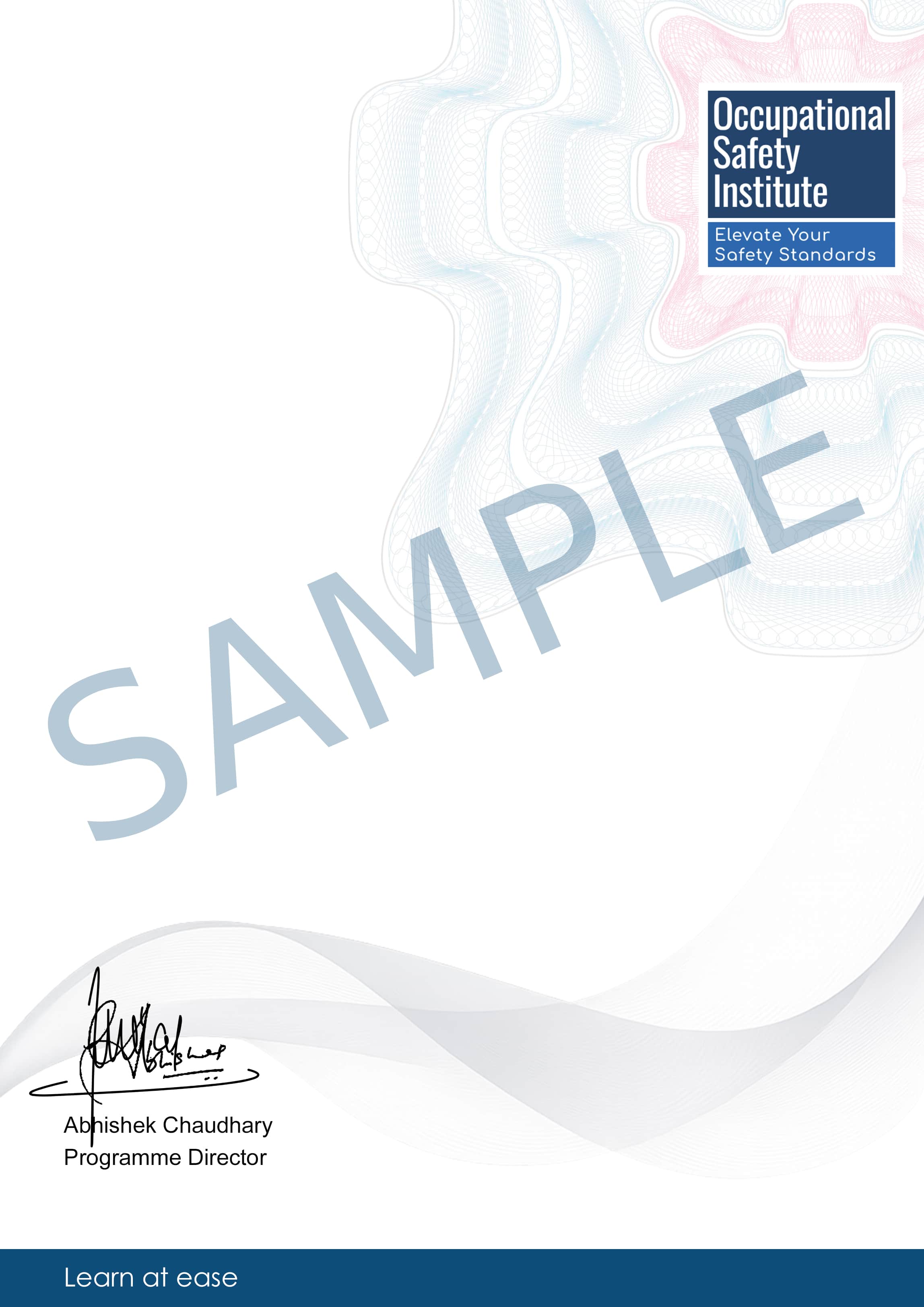
When you complete the assessments, you receive a digital certificate from healthsafetycourses.org, a brand of UK School of Management.
- Unique ID and QR code for online verification
- Confirms successful course completion
This is an independent certificate of completion. It is not a regulated qualification and is not equivalent to a degree or diploma.
Frequently asked questions
What qualifications do I need to enrol in the Fire Prevention in Residential Settings: Strategies, Regulations, and Best Practices for Health and Safety Professionals?
No specific prior qualifications are required. However, basic literacy and numeracy skills are essential for successful completion of the course.
How long does it take to complete the course?
The course is self-paced and flexible. Most learners complete it within 1 to 2 months by dedicating 4 to 6 hours per week.
Is this course accredited?
This course is not accredited by a recognised awarding body and is not regulated by an official institution. It is designed for personal and professional development and is not intended to replace or serve as an equivalent to a formal degree or diploma.
What support is available during the course?
This fully online programme includes comprehensive study materials and a range of support options to enhance your learning experience: - Online quizzes (multiple choice questions) - Audio podcasts (expert commentary) - Live student support via chat The course offers maximum flexibility, allowing you to study at your own pace, on your own schedule.
Can I study this course online?
Yes, the course is delivered entirely online with 24/7 access to learning materials. You can study at your convenience from any device with an internet connection.
Related courses
Ready to start Fire Prevention in Residential Settings: Strategies, Regulations, and Best Practices for Health and Safety Professionals?
Online · $199.99 · 7-day money-back guarantee
Enrol now