
Health and Safety Best Practices for Mare Horse Owners and Handlers Course
This course is designed for mare horse owners and handlers to learn about health and safety best practices. It covers essential topics such as horse behavior, safety protocols, and emergency procedures. By taking this course, participants will gain the knowledge and skills needed to provide a safe and healthy environment for their horses. The course is unique in its focus on practical, real-world applications and is suitable for anyone who works with horses, including owners, handlers, and equine professionals.
- Duration
- ~1–2 months
- Access
- 6 months
- Assessment
- Online multiple choice
Course at a glance
- What it is
- An online health and safety course with an independent certificate of completion.
- Time and cost
- About 1–2 months. $199.99, one payment.
- Recognition
- This course is CPD-accredited by CPDcourses.org.uk. On successful completion, you receive a certificate of completion from healthsafetycourses.org. This is professional development training and is not an Ofqual-regulated qualification or an IOSH or NEBOSH award.
Study materials and assessment
What's included
This programme includes comprehensive study materials designed to support your learning journey and offers maximum flexibility, allowing you to study at your own pace and at a time that suits you best. You will have access to online podcasts with expert audio commentary. In addition, you'll benefit from student support via automatic live chat.
How you're assessed
Assessments for the programme are conducted online through multiple-choice questions that are carefully designed to evaluate your understanding of the course content. These assessments are time-bound, encouraging learners to think critically and manage their time effectively while demonstrating their knowledge in a structured and efficient manner.
Course modules
6 modules
Module 1: Introduction to Horse Safety and Well-being
This module provides an introduction to horse safety and well-being, and covers essential topics such as horse behavior, safety protocols, and emergency procedures. It also includes an overview of the course and its objectives.
- Introduction to horse safety and well-being
- Horse behavior and body language
- Safety protocols and emergency procedures
- Course overview and objectives
Module 2: Understanding Horse Behavior and Body Language
This module provides an in-depth look at horse behavior and body language, and covers topics such as horse communication, social structure, and stress signals. It also includes an overview of how to recognize signs of stress and illness in horses.
- Horse communication and social structure
- Recognizing signs of stress and illness in horses
- Understanding horse body language
- How to approach and handle horses safely
Module 3: Safety Protocols and Emergency Procedures
This module covers essential safety protocols and emergency procedures, including how to respond to accidents and injuries, and how to provide first aid. It also includes an overview of how to develop a safety plan for your horse facility.
- Responding to accidents and injuries
- Providing first aid for horses
- Developing a safety plan for your horse facility
- Emergency procedures for fires, natural disasters, and other emergencies
Module 4: Best Practices for Horse Care and Handling
This module provides an overview of best practices for horse care and handling, including how to provide proper nutrition, shelter, and veterinary care. It also includes an overview of how to handle horses safely and humanely.
- Providing proper nutrition and shelter for horses
- Veterinary care and health checks
- Handling horses safely and humanely
- How to load and transport horses safely
Module 5: Reducing the Risk of Accidents and Injuries
This module provides an overview of how to reduce the risk of accidents and injuries, including how to identify potential hazards and implement safety protocols. It also includes an overview of how to develop a safety plan for your horse facility.
- Identifying potential hazards and implementing safety protocols
- Developing a safety plan for your horse facility
- How to reduce the risk of accidents and injuries
- How to create a safe and healthy environment for horses
Module 6: Creating a Safe and Healthy Environment for Horses
This module provides an overview of how to create a safe and healthy environment for horses, including how to design and build a safe and functional horse facility. It also includes an overview of how to implement best practices for horse care and handling.
- Designing and building a safe and functional horse facility
- Implementing best practices for horse care and handling
- How to create a safe and healthy environment for horses
- How to reduce the risk of accidents and injuries
Your certificate
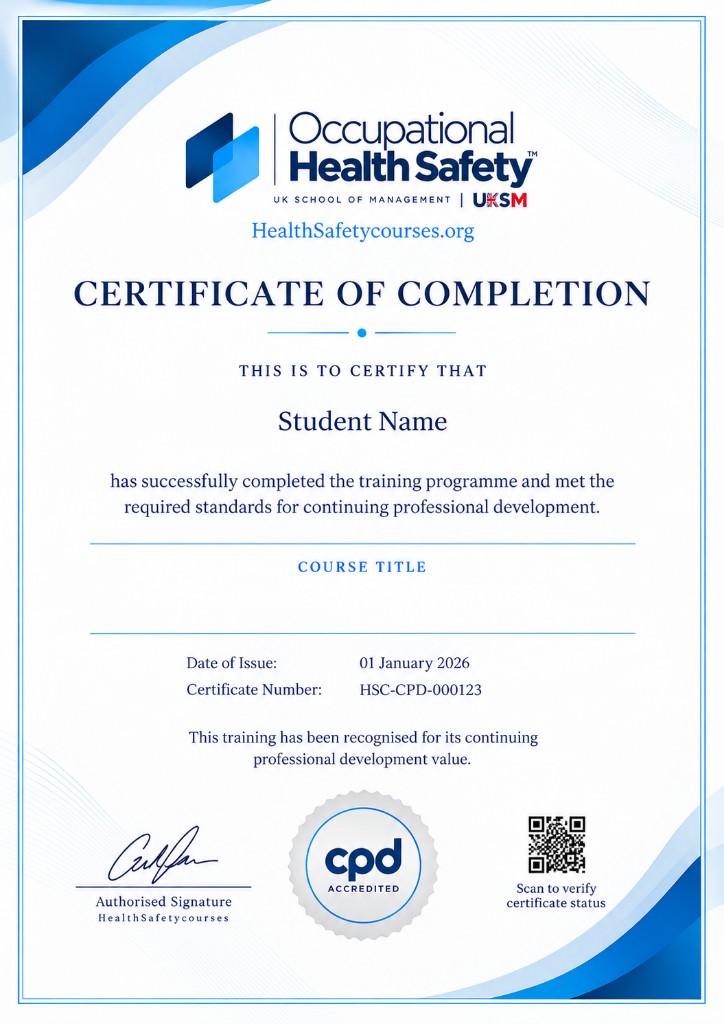
When you pass, you receive a digital certificate of completion from healthsafetycourses.org, a brand of UK School of Management.
- Unique certificate ID and QR code
- Online verification anyone can use
- Shows the course title, study hours and date for your CPD record
Sample certificate — Health and Safety Best Practices for Mare Horse Owners and Handlers
 Health and Safety Best Practices for Mare Horse Owners and Handlers
| Feature | This course | NEBOSH / IOSH |
|---|---|---|
| Best for | Workplace training and CPD records | Roles that name NEBOSH or IOSH in the job advert |
| Recognition | Independent certificate, not regulated | Regulated qualifications from awarding bodies |
| Time | About 1–2 months part time | From a few days (IOSH) to many months (NEBOSH diplomas) |
| Assessment | Online multiple choice | Exams, assignments and sometimes workplace projects |
| Start | Any day, fully online | Set course dates at training centres or online cohorts |
Course fees
Health and Safety Best Practices for Mare Horse Owners and Handlers course FAQs
What qualifications do I need to enrol in the Health and Safety Best Practices for Mare Horse Owners and Handlers?
No specific prior qualifications are required. However, basic literacy and numeracy skills are essential for successful completion of the course.
How long does it take to complete the course?
The course is self-paced and flexible. Most learners complete it within 1 to 2 months by dedicating 4 to 6 hours per week.
Is this course accredited?
This course is not accredited by a recognised awarding body and is not regulated by an official institution. It is designed for personal and professional development and is not intended to replace or serve as an equivalent to a formal degree or diploma.
What support is available during the course?
This fully online programme includes comprehensive study materials and a range of support options to enhance your learning experience: - Online quizzes (multiple choice questions) - Audio podcasts (expert commentary) - Live student support via chat The course offers maximum flexibility, allowing you to study at your own pace, on your own schedule.
Can I study this course online?
Yes, the course is delivered entirely online with 24/7 access to learning materials. You can study at your convenience from any device with an internet connection.