
Executive Certificate Implementing atgcr optogentics in Research Settings: Health and Safety Considerations Certification
Course about Implementing atgcr optogentics in Research Settings: Health and Safety Considerations
4.4/5
|96 reviews
|418 students enrolled
What you'll learn
Skills Gained
Course Overview
Implementing atgcr optogentics in Research Settings: Health and Safety Considerations Course OverviewKey Benefits
Comprehensive, industry-recognized certification that enhances your professional credentials
Self-paced online learning with 24/7 access to course materials for maximum flexibility
Practical knowledge and skills that can be immediately applied in your workplace
Prerequisites
Who Should Attend
Learning Resources
Study Materials
This programme includes comprehensive study materials designed to support your learning journey and offers maximum flexibility, allowing you to study at your own pace and at a time that suits you best.
You will have access to online podcasts with expert audio commentary.
In addition, you'll benefit from student support via automatic live chat.
Assessment Methods
Assessments for the programme are conducted online through multiple-choice questions that are carefully designed to evaluate your understanding of the course content.
These assessments are time-bound, encouraging learners to think critically and manage their time effectively while demonstrating their knowledge in a structured and efficient manner.
What Our Students Say
Dr. Maria Rodriguez 🇪🇸
Neuroscience Researcher
"This course provided me with the essential knowledge to safely implement atgcr optogentics in my research lab, particularly in understanding the potential risks of optogenetic stimulation on neural tissues. I can now confidently design experiments that minimize hazards and ensure compliance with regulatory standards."
Dr. Kaito Nakamura 🇯🇵
Research Scientist
"The course's focus on health and safety considerations for atgcr optogentics in research settings was invaluable, as it highlighted the importance of proper handling and disposal of optogenetic materials to prevent environmental contamination and exposure risks."
Dr. Leila Hassan 🇪🇬
Biomedical Engineer
"I appreciated the course's emphasis on assessing and mitigating the potential risks associated with atgcr optogentics, such as thermal damage and genetic mutation, which has enabled me to develop more robust safety protocols for my research team."
Dr. Rohan Patel 🇬🇧
Research Fellow
"The course provided a comprehensive overview of the regulatory frameworks governing the use of atgcr optogentics in research settings, which has helped me to ensure that my experiments are compliant with international standards and guidelines, thereby reducing the risk of accidents and liabilities."
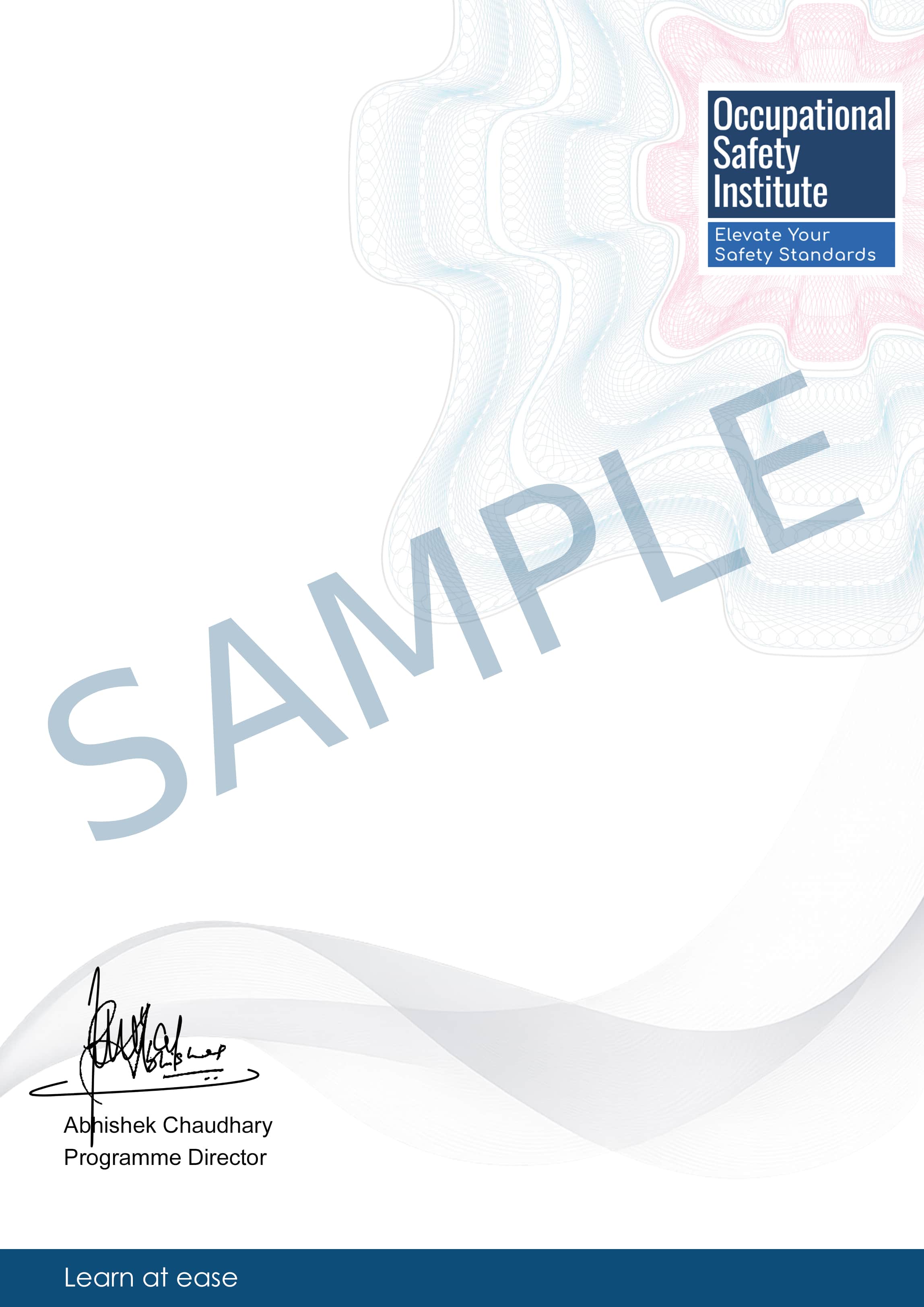
Sample Certificate
Upon successful completion of this course, you will receive a certificate similar to the one shown below:
You might also be interested in
Mastering 三焦橢圓: Advanced Health and Safety Protocols
Course about Mastering 三焦橢圓: Advanced Health and Safety Pro…
Advanced jhzbs是什么文件 Management: Strategies for Mitigating Occupational Hazards and Ensuring Employee Safety
This course provides a comprehensive understanding of Advan…
Occupational Health and Safety in Data Science Environments
This course focuses on occupational health and safety pract…
Data Analytics for Workplace Safety Improvement Workshop
This workshop focuses on utilizing data analytics to enhanc…
Disclaimer: This certificate is not intended to replace or serve as an equivalent to obtaining a formal degree or diploma. This programme is structured for professional enrichment and is offered independently of any formal accreditation framework.